Captain America Premium Format
Showing posts with label books. Show all posts

Monday, 13 August 2012

Doctor Who: Dark Horizons Novel and audiobook review


A Doctor Who story set in Scotland, written by a Scottish author? How could Hi-Ex! ignore this ? This was one book it really would have been remiss of us not to review.
And by some no doubt timey-wimey coincidence, a review copy of the audiobook version arrived round the same time as the novel, so I’ll be reviewing both of them here.
The story is set on the Isle of Lewis, as the Doctor arrives just in time (doesn’t he always?) to get involved in an adventure with the islanders, a boat load of Vikings and a third, mysterious alien force.
Author J.T. Colgan does a wonderful job in evoking the atmosphere of the island, with some brilliant descriptions that sometimes almost leave the reader shivering with the cold and damp she’s describing.
Colgan also presents us with a good cast of characters, all of which are well written. Her take on the Doctor in particular is very good, and she gives him some wonderful lines that are in turn funny or weighted with his many years of existence.
The plot is good, if not particularly original (I think the Earth must be positively littered with crashed alien spaceships by now!), but the aliens themselves are a nice idea.
But the book is not without its problems. There are a couple of occasions where mistakes seem to have slipped passed the editing process. At one point the Doctor appears to be speaking underwater, and on another runs into the water before deciding to roll up is trousers and do it again a couple of paragraphs later.
The contemporary characters also sometimes lapse into modern language and slang, which serves to pull the reader out of the story.
But the good parts are very good. The attitude of the Vikings towards the Doctor is just brilliant and was what I enjoyed most about the story. They see a mysterious stranger with a box in a strange colour they don’t have a word for (which is another lovely touch), who can do incredible things – what else could he be but a god? This to me, made sense they would think like this and was doubly enjoyable because the Doctor was so put out by it. He likes it when people admire the TARDIS, so receiving the opposite reaction makes for some great scenes.
The audio version is read by Neve McIntosh, who has appeared in the TV show a few times, most recently as Madam Vastra in A Good Man Goes to War. She does a very good job at bring the atmosphere in the book to life, help in no small part by her having a head start with the accents. It has all the excellent production values you would expect from and AudioGo release, and is definitely worth seeking out!

Wednesday, 4 July 2012

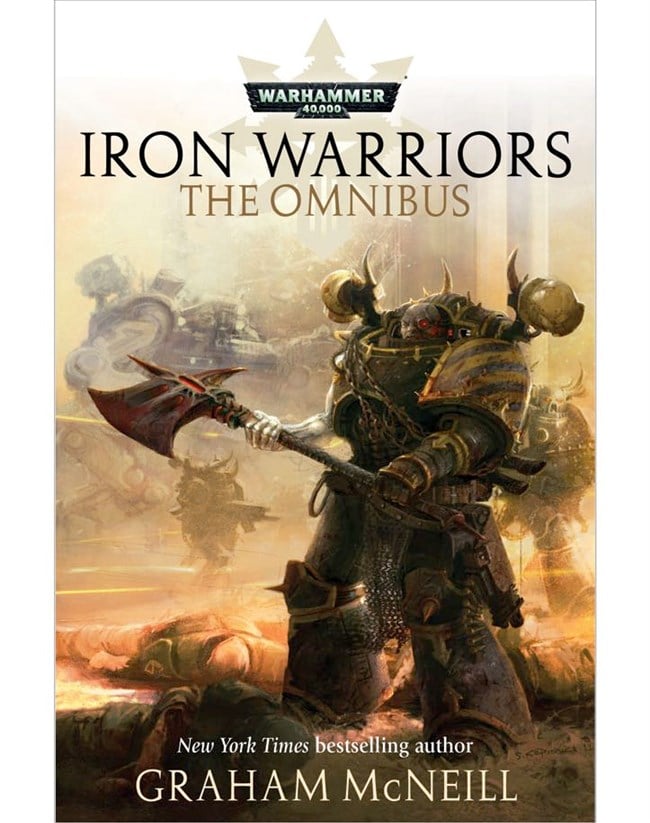
Iron Warriors Omnibus review


If you are a reader of Black Library novels, you will already be familiar with the name Graham McNeill. He is the author of many previous novels set in the Warhammer universe, including the bestselling Ultramarines series featuring the impossibly heroic Uriel Ventris.
This collection gathers together McNeil’s stories of the Chaos Marine chapter The Iron Warriors, which can be seen as a spin-off from the Ultramarines series. Each of the tales in this collection features the character Honsu.
Honsu is an interesting character. While he is cast as the arch enemy and opposite of Uriel, he has a streak of honour in him that suggests to this reader at least that they are not quite as diametrically opposed as they would like to think.
On the face of it the first story in this collection, the full length novel Storm of Iron, seems like an impossible task. It is the story of a castle siege, which doesn’t sound like something that could be sustained for a few hundred pages. Add to that the fact that your lead character and all his supporting cast are utterly Evil, I was expecting this to be a hard read.
How wrong I was! There is real tension in this book as McNeill flips the story between the Chaos Legion on the outside and the beleaguered Imperial Guard army within the walls.
Such is the skill of the writer I genuinely could not decide who I wanted to ‘win’ in the end, and found myself rooting for whatever faction I was reading about at the time, while simultaneously worrying what was happening to the other side.
After this comes the story The Enemy of my Enemy, which follows on nicely from this one, and allows us to visit some of the characters from the novel and see what happened next for them, after the rather bloody ending to Storm of Iron.
I’ll not break each story down here, but I will say that each of them is excellent. The novella Iron Warrior and the final story in the collection, are particularly good, and the latter leaves the reader desperate for more.
McNeil says in his forward that he doesn’t think he’s finished with this character yet, and I for one am looking forward to reading what he gets up to next.

Tuesday, 8 May 2012

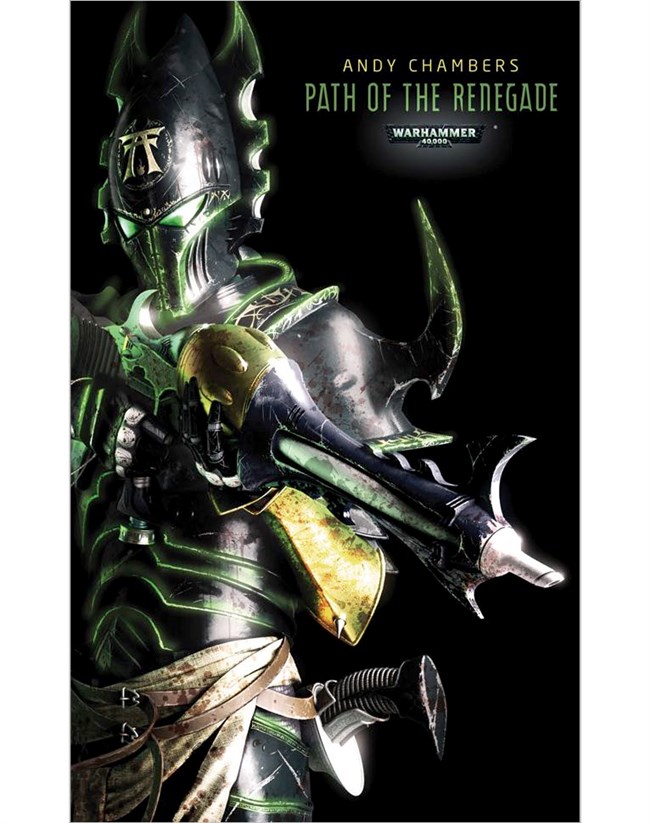
Path of the Renegade review


I’m sure that at least some of you are familiar with the Warhammer 40,000 universe.
We have dipped into it before in this blog with our review of the game Space Marine. And of course, those of you who have attended Hi-Ex! Will no doubt have looked into our enormously popular games room, if not actually taken part in a game or two yourself.
It is a universe that is a lot of fun, but one that can be daunting to the outsider.
One of the best ways into this world, and in fact one you can enjoy without having to be into the games, is the Black Library.
This is a publishing house that is a spin-off of Games Workshop, and publishes an enormous amount of Warhammer based novels.
Path of the Renegade is the first in a series focusing on a race called the Dark Eldar. In 40k, the Eldar are the elves, and the Dark Eldar are, as the name suggests, their evil (or rather, eviler) counterparts.
All these races have a brilliantly rich and vibrant backstory for the writers to draw upon, and Andy Chambers, the author of this particular book, does so with obvious glee.
The Dark Eldar themselves are delicious fun.
Chambers has a bit of an uphill struggle from the beginning with the very nature of the race. Because they are all Bad, then we logically cannot have a hero, a Good Guy for the reader to root for. And while this is true to an extent, it also makes for a very interesting read as we sit back and enjoy a group of characters who are all Evil trying to out-scheme and out-manoeuvre each other for political power.
While all this is going on, there is also a ‘proper’ plot going on, and one that left me nicely wrong footed at the end. Because this is the first book in a series, I as a reader had figured out the pace the major plot elements were going to unfold in my head, so when these things happen when you do not expect them, it makes for a pleasant surprise.
As I mentioned, this is the first in a series, and while I am a bit annoyed the second book is a year away, I will certainly be looking out for it when it is published.

Wednesday, 18 April 2012

Fever review


I reviewed Wayne Simmons’ previous zombie novel Flu here, and now it is the turn of the sequel.
Well, it’s kind of a sequel. The first section of the book is actually set before the events in the previous novel, and they go a long way towards explaining the origins of the flu virus that’s currently sweeping across the world. This whole section is a tight and tautly written one, with a real sense of claustrophobia in places although I did feel a bit cheated at the end of it.
The rest of the book though, sees the reader in more familiar territory. Simmons does a clever thing in not making this a straight sequel. He spends time introducing us to some new characters, and even has them encounter scenes from the previous book. This is a nice idea, as it gives returning readers something to feel good about while not alienating new readers who have not read the previous volume.
I’m actually finding it difficult to talk about the novel too much, for fear of spoilering anything. I will say that we eventually have some questions that were posed towards the end of the first book answered, but are left with different ones at the climax of this one. We meet some familiar faces from Flu as they intersect on their journey of survival with the new characters we have met.
As with his previous novels, Simmons shows here his admirable lack of sentimentality and his willingness to kill off characters at the drop of a hat.
I suspect that there will be at least one more volume in this series. Certainly Simmons has left enough unanswered questions and seems to be enjoying exploring them enough to have him pop back to zombie ravaged Northern Ireland (not the actual one, the one in this book) hopefully sooner rather than later.

Fever is published by Snowbooks.

Wednesday, 9 November 2011

The Recollection review


Clichés are usually clichés for a very good reason: they are true. And in the case of this book the one that applies is ‘Never judge a book by its cover’.
The cover, but Hi-Ex! guest Neil Roberts is quite wonderful and combined with the rest of the cover layout it gives the whole thing a nice old school sci-fi novel feel to it.
Now, I never read the blurb on the back of a book (at least not before I read it), so it is probably my own fault that I was surprised when the book opened in contemporary London.
From there, the story flips between there and some (at first) unnamed other more ‘sci-fi’ time and/or location.
I don’t as a rule read a lot of sci-fi books. I usually limit my reading to the more obvious authors like Iain M Banks or, as is the case here, ones that have been sent for review. I also have to confess that I had never heard of Gareth Powell before, even though he has written two book previous to this one, and on the strength of this one, I’ll be searching them out.
Powell writes in short chapters of only a few pages. It is an old trick but it is also a good one, as it keeps the reader hanging on past their bedtime for just one more chapter
This is an impressive book. The Earthbound scenes start with a brilliant high concept idea, while the other strand of story exhibits a breadth of imagination up there with the best of them. Powell has the same knack the aforementioned Banks has of taking an idea and expanding it into something mind boggling, as he does here with his bubble habitats.
But it’s not all grand ideas, there is also a very good plot running through here. I did wonder at one point just how he was going to join up the disparate plot strands, but Powell does so in a clever, and (it has to be said) in retrospect, obvious way. I say ‘obvious’ because I really should have figured it out!
Anyway, the plot: it is great stuff. Powell manages to pull some original ideas out of his hat, while riffing on some well worn sci-fi trope.
It all ends well too. And by ‘well’ I don’t necessarily mean it has a happy ending (or not), I mean that he deftly ties up plot points and leaves just enough dangling there that the reader will hopefully want more. And in this he succeeds.
All in all, this book is well worth seeking out – you’ll find details on the Solaris website.
I started this review with a cliché, so I’ll end with one too: Gareth L Powell is one to watch.


Tuesday, 1 November 2011

No Man's World The Ironclad Prophecy review


I hadn’t read the first book in this series, Black Hand Gang. But after just a few pages of this one, I was beginning to regret that fact.
This was not, as you might be assuming, because I had no clue what was happening here, but actually because this was such a brilliant premise that I immediately wanted to know more about it.
Briefly, this is about a group of British soldiers who have been transported from their ‘home’ on the Somme to an alien world.
Yes, you did read that right.
And yes, you’re correct. This should not work, as it is a concept so high that it is in danger of running out of air. Nevertheless, work it does.
The book begins with the sizeable cast picking up the pieces of what I assume are the events of the first book. Author Pat Kelleher mentions past events throughout this volume, but in such a clever way that they don’t feel forced and, more importantly, don’t make the reader feel that they have been told so much that they don’t need to read the previous volume.
The book is split into two distinct plot strands, as we follow the Zulu-like battles around the British trenches as they fight a horde of aliens while dealing with other, perhaps more sinister, events.
The second tale is of the crew of the Ivanhoe – a tank that also made the journey. This is for me the more entertaining of the two strands. Kelleher has assembled a great cast of characters, with Atkins, the down to Earth corporal charged with bringing the tank crew back and Mathers, the Lieutenant in charge of the tank being particularly interesting, although Kelleher manages to give pretty much everyone enough to do at some point during the book.
There is action aplenty here, with some very well described fight scenes, although I did not feel any urgency over the soldiers running out of ammo, even though this is something that is mentioned regularly.
If you have a peek at the cover, there is a scene depicted there that is one of the highlights of the novel. To tell you why would be cruel as it would ruin it totally, but you can just trust me on this one…
As this is the second book in a series, you should not expect everything to be sewn up nicely at the end. It is true the plot arcs for this book are brought together and resolved well, but as you would expect, there are cliff-hangers and unanswered questions aplenty there too.
I’m already looking forward to the third book in the series, but in the meantime I can comfort myself with the knowledge that I have the first one to tide myself over until Abaddon release it..

Friday, 22 July 2011

The Afterblight Chronicles: America review


You may already be aware of the Afterblight series from Abaddon books. If you haven’t (or indeed, if you have), the series is set in the aftermath of a worldwide plague that has wiped out the majority of the planet’s population.
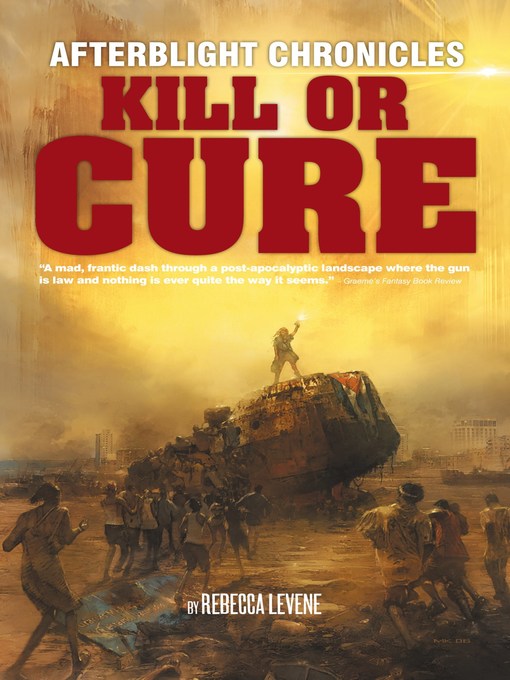
This volume collects three of the early novels in the series. The first two books in the run: The Culled by Simon Spurrier and Kill or Cure by Rebecca Levene are here alongside Death Got No Mercy by fan favourite Al Ewing.

The Culled serves brilliantly as an introduction to the world, and the unnamed main character is an excellent vehicle – his job in the previous world allowed him access to information on the plague that he kindly shares with the reader.
The story itself is a pretty good one too. The central mystery of the book- the Quest our hero is on- is well handled. Spurrier drip-feeds information throughout the book on this while at the same time engaging in some major world building- he has the job of setting things up for every book that will follow after all!
The author also seems to delight in putting his lead character through some of the most horrendous tortures (something he shares with Al Ewing in his contribution), dropping him into some severe situations- all of which makes for an exciting book.
Think James Bond meets Mad Max and you’re part-way there!

Levene’s Kill or Cure is a clever almost sort of follow-up to Spurrier’s novel. The books cross paths on a couple of occasions, but it would be a shame to tell you exactly how, as it would spoil it somewhat.
Levene takes what Spurrier has laid out in his book and builds on it admirably, expanding on things he has hinted on and adding more clever ones of her own.
Her lead character is altogether more sympathetic than Spurrier’s, and the reader really feels for her as things go pear shaped. It is not without moments that give the reader pause. The lead is very resourceful. She is able to fire a gun for example, with considerable skill. This is explained somewhat, but still sticks out a bit- as does the ease with which she kills. I would have thought that a doctor, for that is what she is, would have at least had slight pause before killing. Then again, I have never been in a post-apocalypse situation, so really can’t say how anyone should or would act!


And then we come to Ewing’s Death Got no Mercy. If you are in any way familiar with Al’s oeuvre, then you’ll know roughly what to expect here. I’ve went on record as saying that Ewing is going to be the major talent in comics- certainly in British comics, and probably on the world stage too- in the next few years. But let’s not forget that he’s a hell of a prose writer too.
This book is... mental. As series editor Jon Oliver says in his intro to this collection, Al described it as ‘A man goes to San Francisco and kills everyone’. And Ewing is as good as his word.
Cade, the lead character, is quite a creation. He is a genuine force of nature- a character propelled onwards by a single purpose. Along the way towards this purpose he does a lot of very violent things. Brutally violent things is short and punchy (haha!) chapters. But they are also very funny things. The violence is so massively over the top that the reader can do nothing but be swept along by the wave of brutality. He has a fist fight with a grizzly bear.
There are a couple of hiccups there though. There is a meta-fictional passage in there that is clever and well written, and I can understand why it is there, but is only succeeded in pulling me out of the book for a few pages. And Cade, the lead character, meets a group of folks along the way that for me were a too easy joke to make (they were still funny though!).
But having said that, this book is great. Cade is a wonderfully brutal character, and I for one wouldn’t mind seeing more of him.

And that brings me to my only real problem with the three books here. This does not apply as much to Ewing’s book as to the other two, although he is guilty of it to an extent.
Each book, while being a self contained tale it its own right, ends with the lead character heading off on either another quest or on the next stage of the one they were on, and to the best of my knowledge, none of the creators has returned to their stories to tell the next chapter.
On balance though, this is a very good value collection, and if you haven’t yet visited the world of the Afterblight, I suggest you give it a try.

Wednesday, 29 June 2011

Dead of Veridon review


This is the second book in (what I assume) will be a series set in the city of Veridon. 
In case you don’t know, Veridon is a kind of sci-fi/ steampunk city which in inhabited by a cast of strange characters and is powered by incredible cog-driven technology.
I should confess right now that I had not read the previous book in this series when this one fell into my hands. But, you know when you read reviews where the reviewer says that you don’t need to read the first book before reading this one, and it is not always true? Well, I can confidently say that in this case it is.
Author Tim Akers is deft at weaving the backstory of the main character and explaining what has gone on previously into the main narrative of this book. This, it should be made clean, is no mean feat. It takes a writer of some skill to do this without it looking clunky.
But anyway- on with the book!
Looking back on it after reading it I realised just how ridiculously fast paced it is. It’s a fairy large tome at 360-odd pages, but in no way seems it. The writing is very very good indeed. The plot is just brilliant- I’m not particularly well read in either the steampunk or zombie genres (genri?), so this book, which from a certain light could be seen as a combination of the two, is a treat.
There are a few stand out sequences in here – but my dislike of spoilers forbids me from talking about a lot of when goes on here- but the scene depicted in the marvellous cover image (which takes place at the beginning of the book, so I think I can talk about it) in which our ‘hero’ journeys deep beneath the river that feeds the city of Veridon is supremely creepy and is a testament to Akers’s ability to paint a picture with the minimum of fuss.
Which brings us to the afore mentioned ‘hero’. It’s in inverted commas because he isn’t a hero. Jacob Burn is really just a slightly likeable, but mainly quite selfish and lazy, petty criminal who, through accident of birth and an ability to be in the wrong place, is pulled into this world of high adventure and intrigue.
Again, Akers does a great job with the characters. The dialogue, especially between Jacob and his ‘sidekick’ sparks with a wonderful warmth and humour.
So, in closing- and just in case you have missed the tone of the review- I was really impressed by this book. It was a very entertaining read- well written well plotted and very exciting.
I want to read the next one now, please.

Thursday, 21 April 2011

Loss of Separation review


I used to read a lot of what would be called horror novels as a youngster, but when I started reading Loss of Separation from Solaris books, I realised that- apart from Stephen King and Clive Barker- I had not read what you would call a ‘classic’ horror novel for ages.
For that reason, the opening chapters of this book felt like a visit from an old friend.
What I mean by that is that this to me felt like an old fashioned British ghost story. Conrad Williams manages to built a wonderful atmosphere through this book. I’ve been trying to think of who it reminds me of, and my mind kept coming back to Ramsey Campbell as I was reading- not, I hasten to add in the style, Williams is his own man- but in the all pervading aura of unsettling-ness that is evident (and yes, from now on, unsettling-nees is a word). But then as I started to type that last sentence I also thought of Phil Rickman and his awesomely atmospheric Merrily Watkins books.
But onto the book itself. It concerns itself with the story of Paul Roan, an airline pilot who has had a rather bad run of luck of late. He leaves the job after a near miss, gets hit by a car and wakes up from a six month coma to find that his girlfriend has gone missing.
This unfolds at a pleasingly sedate pace, reflecting the speed of life in that small English fishing village it takes place in. The cast of characters is small, but well written and Williams has a very good ear for dialogue.
That’s not to say I did not have problems with the book. One of these is not of the author’s doing, but is one that appears in a lot of fiction (mine own included). Here we have a lead character who is enormously resourceful and has as much money as he ever needs at his disposal. This is, of course, so that things like buying a train ticket don’t get in the way of story telling, but (and as I said, I have committed this act too) it does add a sheen of unrealism to the proceedings.
The other thing is some of the language that the lead character uses. He’s an intelligent man, that I can accept, but I don’t think many people would describe stones as 'pareidol', and living in the Highlands, I have never heard a Highland Cow referred to as a ‘kyloe’.
On the plus side though- I was quite worried while reading this that I knew where it was going at the end, and was hoping that I was wrong. I am happy to report that I was. And while, upon first reading, the ending appeared to be somewhat unsatisfying to me, on further reflection I think the ending is in fact superb. I loved the sense of ambiguity that I was left with as a reader, which is, I suspect, the thing that reminds me of the aforementioned Phil Rickman’s work.
Read this to revel in the sense of unease, and the creepy atmosphere that pervades the book


Thursday, 31 March 2011

Viking Dead review


Zombies, eh?
I don’t know about you, but I am of the opinion that they have been, of late, somewhat over exposed. So it takes something special to make me sit up and take notice.
Thankfully, Abaddon have been managing to do this, with books like Way of the Barefoot Zombie and I, Zombie both taking the genre in original and interesting directions.
And you’d have to be dead inside not to think the prospect of Viking zombies was very cool indeed.
So… does this book live up to the hopes I had for it..?
Things start off well. I love having my expectations subverted, and this book does that very early on, as the reader thinks it is going to be about one thing and it quickly becomes apparent it is not.
Now, I’m not an expert in Vikings and their lore and lifestyle, but I get the impression that author Toby Venables is. Or if not an expert, it feels like he has done his research and he doesn’t allow the research to swamp the story.
And the story is, I’m happy to report, a good one. I have to say, that while he has assembled a great cast of characters, the story is not, for the most part, particularly original, with nods to things like The Magnificent Seven and a few other classics in there. This is not to say that it is not well told, however.
Venables tells the tale in short chapters that make this an easy read and has the reader hanging on for just one-more-chapter…
I mentioned characters- and yes, they are well realised, but I had a minor problem with the names. They are, I’m sure, authentic Viking monikers, but the trouble is I have no idea how to pronounce them, so was recognising characters by a collection of letters on a page rather then a name.
The other good things: the pacing is great and the plentiful action scenes are well written. And there are the zombies. We don’t see many of them for the first part of the book. Their presence is hinted at and they are genuinely spooky when we do encounter them.
And then there is the ending…
I had an inkling about what was going on earlier in the book, and was kind of correct when we got to the final chapters. Now, initially, I did not think the ending was going to work But by the gods it does.
I mean literally right up until the final paragraph I thought Venables had dropped the ball on the final stretch, but as he reveals his true intentions in the closing words, I could not help punching the air in glee.
Obviously I will not spoiler anything here… but if you think that Zombie Vikings are cool, well…

Sunday, 27 February 2011

Drop Dead Gorgeous review


After reading Simmons’s previous novel (well, not exactly 'previous'… I shall explain later) Flu, I was looking forward to reading Drop Dead Gorgeous. Flu was the previous novel to this one, but this novel had been previously published and this edition is a slightly reworked reprint… so Flu is kind of the second novel, not this one… None of which matters at all, of course!
Like Flu, this novel also has a high concept idea behind it. With Flu it was a zombie apocalypse, whereas here Simmons has asked himself: what if 99% of the world population dropped dead one morning?

There are a number of surface similarities with Flu: the cast of disparate characters and the Belfast setting, but it is a very different book. The Belfast setting works a lot better in this book than it did in Flu. This is, I think, is because here Simmons is not afraid to use some big city landmarks- The Europa Hotel or The Victoria Centre for example, which instantly gives it a strong sense of place.
The characters are all well realized and not necessarily likable- in fact most of them are not. Even the one that could conceivably be called the main character- a tattooist called Star- is highly unlikeable at times. It’s nice to see characters in this sort of novel behaving like real people, and not transforming into some kind of super resourceful survivor overnight as they tend to do sometimes…
What I enjoyed most though, was that Simmons resists the urge to explain anything. Even when, in the final act of the book, 'Things' start to happen and the writer obviously knows what they are, he doesn’t bother to tell us. I’m sure there are some of you out there who want to see what’s behind the curtain- but I am not one of them.
As with Flu, Simmons has a lack of attachment to his characters that is admirable. No one is safe, and this makes for some genuinely shocking moments.
In my review of Flu on another site, I commented on some highly convenient coincidences with the characters. Well, there is just the one in this book, but it works brilliantly to provide an emotional coda to a character arc. And this is all veering dangerously close to spoiler territory for my liking, so I shall stop talking about specifics now.
All in all, this is a fast paced and bloody horror novel. I’m genuinely interested in reading what Simmons does next- I suspect he could be a major new talent.

Drop Dead Gorgeous is published by Snowbooks. 

Sunday, 13 February 2011

Alan Moore: Storyteller preview

portrait by Danny North

Gary Spencer Millage, writer of the wonderful Strangehaven has just completed work on his next book, Alan Moore: Storyteller.
Gary writes about it on his blog, which you can find HERE.
The book will be published in the UK in May by Ilex Press.

Alan's parents wedding: 1952


We've been lucky enough to see a preview of some of the book, and if what we have seen is anything to go by, you are in for a treat. It is full of fascinating snippets- everything from early family photographs to some of his first published cartoon work to thumbnails for the world changing graphic novel From Hell.
All this is accompanied by in depth interviews with the Man Himself and information about his many landmark series.


This illustration of Elvis Costello was Moore's first professional sale


We'll keep you up to date with any new info about this wonderful looking book, and bring you a full review nearer the time.


And by the way, in searching for a picture of Mr Moore for the top of this page, we found this wonder, which it too good not to share:


Sunday, 30 January 2011

Songs of the Wolf review


Before I begin, I should point out that I am not a fan of what you would call the ‘fantasy’ genre. Perhaps I should revaluate this position, because as with Engineering Infinity where I discovered that I actually did like hard sci-fi stories, I found myself enjoying this book a great deal.

I should also point out that this is not actually one novel but a collected edition featuring two novellas: The Wolf’s Sister and The Wolf’s Mate. In reality though, they are both chapters in the same tale.
One of the things that in my experience destroys the experience of reading a novel in a fantasy setting is the lack of world building, or too much world building for that matter. Some fantasy writers are too interested in the wonderful universe they have created and spend more time explaining their clever back stories and the history of their races than on little things like character and plot. Obviously, I’m not naming anyone here, but we all know who I’m Tolkien about...

Where was I? Oh yeah- world building. It’s something that RF Long does with an admirable skill and subtle touch. There is not too much detail or dense background provided (the whole book runs to a slim- for a fantasy book- 240-odd pages) and what detail she does provide is inserted well, so that it does not come over as exposition.

The characters are also very well realised, with the arc of the main protagonist, Jeren, particularly well written and enjoyable- her frustrations, her feelings, her fears- they are all communicated expertly- again, without the need for clumsy exposition. If I keep going on about this, it is because it is a skill a surprising number of writers do not seem to be bothered with.

Things I didn't like? One of my other problems with fantasy books are the character names. I find loads of apostrophes and the like in names to be distracting, and Long does employ them here sometimes, but she has the sense to shorten character names to make them easier to digest.
Something I thought I would not enjoy was the prospect of reading a romance story. But breathe easy men! I have to confess that my expectations on this front were not high, but again, Long deals with the relationship between the two main characters in such a way as to have the romance and their growing feelings for each other a constant part of the story, but not overpowering the plot in any way. And, I should add that there is plenty of action in here too- and it is written in a lovely fluid style.

All in all, this is well worth hunting out, but it does end at exactly the wrong moment (or, rather- exactly the right moment)- there is still much of the story left to tell, and I hope she returns to it soon.

Songs of the Wolf is available from Samhain Publishing.

Tuesday, 18 January 2011

Engineering Infinity Review


I have to confess that when I hear the term ‘Hard Sci-fi’ I usually give a bit of a shudder.
I'm not, as a rule, a fan of this subgenre. To me, the name Hard Sci-fi conjures up pages of long dry discussion on the physics and science of FTL and time travel. These are things that I am interested in, I’m just not interested in reading about them in a novel- I like hyperspace and flashing purple laser beams in space!
This is not to say I don’t read any. I am a big fan of Clarke, for example, and his ability to communicate astonishingly complex science in a few simple words is wondrous in itself.
But reading this collect has got me re-evaluating what I think of as Hard Sci-fi. There are tales in here that I wouldn’t have classed as such- but on reflection, of course they are. If you take hard Sci-fi to be any story that has real science as a base to it, then you’re opening the market up to almost anything short of Star Wars and most of Doctor Who.
So, on to the collection.
Editor Jonathan Strahan has assembled quite a formidable roster of writers for this Solaris book- most eye catching among them being Stephen Baxter and Charles Stross. Actually, Stross is another writer we can add to the list of Hard Sci-fi authors I have enjoyed reading previously.

As with all collections, this is a mixed bag. There were some stories I didn’t enjoy as much as others, and even one I’ll hold my hands up to admitting I didn’t understand at all.
I suppose you’ll be wanting a blow by blow account of the various stories? Well, I’m not going to. I’ll mention a few though.
The opening tale, Malak by Peter Watts is an interesting, if downbeat, opener, telling the story of an automated flying weapon in war in the Middle East. Thought provoking stuff, as good sci-fi should be.
Some are brilliantly character driven, in a way that some readers (yes- I mean me) don’t usually associate with Hard Sci-fi. Kristine Kathryn Rusch, Charles Stross and John C Wright provide tales that are pretty heartbreaking in their own way.
The Server and the Dragon by Hannu Rajaniemi is a nice modern, well not modern, future fairy tale.
Actually, looking through the book again to write this, I can honestly say that almost every tale hit the mark for me, apart from the aforementioned one I didn’t understand. And that is, of course, not to say it was badly written. It clearly wasn’t.
Ahhh... I was about to launch into another paragraph mentioning story after story again! I shall limit myself to two more, and two more only.
The Invasion of Venus by Stephen Baxter. I like stories that remind us of our place in the universe, and this is one such tale. We had a similarly themed alien invasion of Earth tale in a recent issue of FutureQuake (I hasten to add that the stories are in no way similar- they just explore the same themes).
And finally, possibly my favourite tale in the book, The Birds and the Bees and the Gasoline Trees by John Barnes (not the ex-footballer, I’m guessing). I loved this for two reasons. Firstly, it got me with a marvellous semi-twist. I saw where things were going with this narrative and he outfoxed me by not only changing the tack of the tale and having one of the characters address it.
The other is the sheer scope of the idea driving the story. Seriously, it is massive and thought provoking and, of course, this being a Hard Sci-fi book, all too plausible. I say ‘all too’ as if it’s a bad thing, but the bigger part of me would think it really really cool if something like the events depicted in this story actually happened. Again, as with the Baxter story, this one really puts us in our place as a species.
All in all, an excellent collection of stories, and one that will have me seeking out more work from the authors featured here. One thing though- an inordinate amount of them seem to live in Edinburgh...


Monday, 10 January 2011

The Age of Odin review


James Lovegrove has, in a couple of previous books, used the idea of ancient gods in a modern world setting. He’s already had a go at the Egyptian and Greek pantheons, so now it’s the turn of the Norse gods.
So, what we have here are the Norse gods- in particular Odin and Thor, assembling an army to defeat, well, I’ll let you find out the villain of the story yourself, but I have to say, it’s a nice little twist, and one that doubly annoyed be because I really should have seen it coming!
Lovegrove had constructed some nice characters. While pretty much all but the main cast are thinly drawn, those that are flesh out are fleshed out well. Gideon 'Gid' Coxall, the main character, in particular is an interesting one. (As an aside, I’m impressed by the fact that he has managed to write a book this length in first person and maintain pace and coherency so well) He is an ex-soldier, and not a particularly nice one. I’ve known a few soldiers and ex-soldiers in my time, and the banter and dialogue between them comes across as realistic. It’s nice and sweary, but if anything, not sweary enough (again, from the soldiers I have known!)!
 I love the idea, and it’s so good I’m amazed no one has thought of it before (and if they have, I’m sure you’ll let me know), of equating  what we today would call ‘violent mood swings’ with what the Vikings called a Berserker rage.
While this is a hefty book, there were not many places where the story seemed to slacken. Yes, the ruthless editor in me could see how it could be shortened, but the pace does not suffer from the length.
There are some great action sequences, and the author has incorporated elements of Norse mythology (Sleipnir, Fenrir and the Valkyries for example) in a clever way.
The book is not without its problems though. I found the way Gid accepted his situation –he’s been taken from our world to Asgard, the world of the gods- to be too easy. But I suppose this could be explained as a pragmatic soldier-like approach. I also did not get a real sense of the scale of the battles. The guys here are literally fighting for the future of the world, but I think because all the action takes place in and around Odin’s castle, the effect on the outside world is not really communicated. But as I said, when the action does happen, it is exciting, expertly paced, clearly written and immersive. Lovegrove is a damned good writer, make no mistake.
I almost had another big problem with the ending. It appeared to veer very close to the Biggest No-No Twist there is, but Lovegrove manages to neatly side-step it at the last moment.
So, despite those problems, this is still a stonking read. It’s what I imagine the result would be if Neil Gamian and Tom Clancy wrote a book together- in a good way!

Tuesday, 9 November 2010

Michael Carroll Speaks!


So here we have it! The first in what we hope will be a long series of interviews with artists, writers and all round cool people.For anyone who has been to HiEx, Mike should need no introduction. He's a spectacularly good writer and also a good friend of ours- as well as being responsible for the majestic looking HiEx website.

And here we go...

Tell us about your books…
The New Heroes (published in the USA under the title Quantum Prophecy) is a series of superhero novels – and short stories – for the “young adult” market. To date, four novels have been published and the fifth is scheduled for publication next summer. I’m currently working on the sixth… The plan, should it all come together, is for eight novels in total.
The first three books (The Quantum Prophecy, Sakkara and Absolute Power) tell the story of two young teenage boys who grew up in a world very much like the real one, except that until ten years ago there use to be superheroes… All the superheroes (and supervillains!) disappeared following a great big battle. Our young heroes, naturally, start developing superhuman abilities of their own, and this triggers a sequence of events that, ultimately, leads to a battle for world domination!

We learn pretty early on in the first book that the old superhumans didn’t all die, they simply lost their powers. That’s the “first phase” of the story, and the third book wraps up most – but not all! – of the plot threads.The second phase begins with the fourth novel – Super Human – which is set about 23 years before the main storyline of the first phase, back in the days when many of the old superhumans were still in their teens and early twenties… And still had their powers.
It basically tells the story of how the world of the first phase came to be, plus it plants a few seeds for the future.
The fifth novel carries on from the fourth, but I’m not saying a word about that one, other than that it’s called The Ascension and it’s tremendously exciting!The sixth novel… Well, it’s part of the second phase too, but it’ll be quite a bit different to the others. That’s all I’m saying!
How long have you been writing? What got you started?

I’ve been writing since… um… a long time ago. My first published short story appeared in 1990, and my first novel in 1993. That was a YA novel too, and it’s scary to think that the thirteen-year-olds it was aimed at are now thirty.
As to how I got started… I’ve always wanted to write, from as far back as I can remember. I don’t remember ever actually making the decision to be a writer – it’s always been a part of me.
But, as I’m forever telling other would-be writers, wanting to write is not the same as writing. When I was in my early teens I wrote some absolutely rubbish short stories, and more than once I started a novel. I don’t think I got more than a few pages into any of them.
One I recall quite clearly was my unofficial novelisation of the first Judge Death story from 2000 AD: I was very impressed with the character of Judge Death and thought it would be an ideal way to delve into the history of Judge Dredd.
That one was hammered out on my mother’s old portable manual typewriter… You young people today with your word-processors! You don’t know you’re born, you lot! The portable manual typewriter… Man, it was tough going. To get some idea of what it was like, try sending a tweet on your smartphone while wearing oven gloves and a blindfold. The keyboard didn’t have a one or a zero: instead, we were expected to use lower-case L and capital O. And – here’s the kicker for anyone who’s never used a typewriter – when you got to the end of the page you had to take it out and put in a new one. Plus there was no Undo!
Anyway… That Judge Death novel didn’t survive more than a couple of pages either.
I didn’t really get started writing until I joined the Irish Science Fiction Association in 1989, and I only found out about the association because I saw a flyer advertising the appearance of Harry Harrison – my all-time favourite author – at an upcoming meeting. This is where all the links begin to join up, guys… I discovered Harry’s books because his novel The Stainless Steel Rat was adapted in 2000 AD.
Once I joined the association I submitted a short story to their fiction magazine FTL, and three months later I somehow became the magazine’s editor (and shortly after that, chairman of the association).
Around that time some members of the association decided to run a convention – Octocon, which still takes place every year in October – and they advertised for people to help out. One of those people was Leonia, with whom I immediately fell in love and subsequently married (best decision I ever made!).
At the second Octocon in 1991 I met the writer Michael Scott, and mentioned to him that I’d “always wanted to write a novel.” Michael responded with, “Well, why don’t you?” I didn’t have an answer for that… That was the key event that turned me from a wanna-be writer with a small handful of rather badly-written stories behind me to an actual writer working feverishly on his first real novel. Which also turned out to be rather badly-written, but I didn’t realise that then!
So it all started with 2000 AD!

What are you working on now?

Right now, I’m finishing up the pre-development work on the sixth Quantum Prophecy novel, plus I’ve got some strips for 2000 AD in the pipeline, and I’ve just finished an adult novel based on John Higgins’ Razorjack graphic novel. That’s not a novelisation, mind you: it’s an original tale inspired by John’s excellent work! It’s called Double-Crossing and it’ll be coming out from Com.X next year, alongside Al Ewing’s wonderful and incredibly disturbing novel Wire Mother, also a Razorjack novel – hopefully, they’ll be just the first two of many in an ongoing series!


Following the sixth Quantum Prophecy novel, I’ll be laying down the plans for the final two novels in the series. I’m so looking forward to that I can barely contain myself! The seventh book ends on the mother and father of all cliff-hangers, and the eighth one... Well, I’ll just say that it wraps up the whole storyline in a way that no one is going to see coming!

In an ideal world what would you like to be doing?
I’m doing it! Writing is the best job in the world! Ideally, though, I’d like to be doing what I’m doing now, only with more money. It’s not that I’m greedy, it’s just that all of the money in the world is mine. Most people don’t yet seem to have realised that.

What is your biggest frustration as a writer?
Gaah! Where do I start? There are so many frustrating things about this job… It’s hard to pick just one! See, even though I said it’s the best job in the world, it does have negative points. For example: when a celebrity comes along with a book someone else wrote for them and it tops the best-seller lists. That’s annoying – they’re already rich and now they’re taking money away from real writers!Also annoying: when a fictional character on TV has written a book. In those cases, their books are always best-sellers and they always get to plug the book on Oprah.
In real life, 99% of writers earn less than the minimum wage, there’s almost no promotion, there are no swanky black-tie launch parties, and bookstore signings run the very high risk of absolutely no one turning up to meet the writer (that has actually happened to me!).
Equally annoying: When a publisher gives a brand-new writer a seven-figure advance which completely blows the budget for the next couple of years, leading to established writers – whose books were plodding along quite nicely until then – suddenly finding themselves dropped. Grr! (Still, at least there’s the satisfaction of watching that brand-new writer’s books go straight into the bargain bookstores!)
But my biggest frustration as a writer… When a publisher tells you the bad news that a book didn’t sell as well as they’d hoped, so they won’t be taking the next one. That’s bad, but what’s even badder is when the publishers invested exactly zero money in promoting said book.
I mean, that’s their job! My job is to write the words, their job is to make sure the book sells. If it doesn’t sell, it’s their fault, not mine! The quality of a book has very little to do with how well it sells: we can all name absolutely rotten books that are massive best-sellers.
Of course, it’s important to understand that it cuts both ways: when a book sells really well, it’s almost never because it’s a good book – it’s because the publishers have got a good marketing team and they’ve invested a lot of time and money into promoting the book.
Therein lies a great danger, though… See, even though the author’s name is prominent on the cover, we don’t do this alone. Very few authors are so good that they can produce a perfect manuscript right out of the box: Good books need good editors to kick them into shape. But when an author’s books becomes a huge success the idea starts to form that the success is entirely theirs, that their words are sacred and should not be altered. When that happens, when the author becomes more important than the book, the quality of the finished product starts to slip.


What is or has been a particular high point for you?

I’ve had a lot of high points: Having one of my stories picked to appear in a school textbook, being named by a very well-known literary critic as his favourite living Irish writer, having my first story appear in 2000 AD, seeing someone on the train reading one of my books and laughing out loud at the funny parts…


But probably the biggest high point was a couple of months ago when I received an e-mail from a woman in America: she said that her son was a very reluctant reader, way behind everyone else in his grade, and they had tried everything to get him interested in books. Nothing worked, until they found the Quantum Prophecy series. He ploughed through the first book in only a couple of days, and then begged her to buy the rest of the series. Now, she said, her son is a voracious reader, his grades have shot up, he’s paying much more interest in school – he’s now top of his class – and, even better, he’s turned from a sullen, sulky loner into a bright, out-going young man who is “a lot more pleasant to be around!”
I can’t claim credit for all of that, of course, but it’s nice to know that my books provided the spark. That’s why I write. That’s why I put in eighty-plus hours a week! Not for the fame or the money, but for the satisfaction of knowing that there are kids out there, most of whom I’ll never meet, who are reading my books, enjoying them, and – hopefully – discovering the joy of reading.

Did your education help or hinder the work you do now?
I reckon it helped… I should point out that I left school at sixteen so I don’t have a lot of formal education, but I had a couple of great English teachers in secondary school who really helped me to appreciate the written word. For most of my formative years I read only science fiction, but Mister Murtagh and Mister Pender taught me to expand the boundaries. There are good books that don’t have monsters, robots or aliens in them! Astonishing!
I do often wonder how my life would have turned out had I stayed in school and then gone to college (not because I have any regrets, but because I’m a writer and my job is to wonder about everything all the time).
What is your writing work regime if you have one?

I generally get up at about ten, and work through until my wife gets home at six in the evening. Then I work from eleven that night until about four the next morning (and I get a lot more work done in those five hour at night than in the eight hours of the day – mostly because the phone doesn’t ring!). At the weekends, I generally do about eight or nine hours each day.
It all depends, though, on what stage I’m at in a book. For each book, I generally spend about six months in “pre-production”: working out the plot, designing the characters, pulling together all the necessary research, and so on.
For the plot, I start with a bunch of ideas and constantly go over and over the story, looking at every part of it from every possible angle. I do this in the word-processor, writing notes to myself. By the time I get to the end, I’ll have the entire story worked out, right down to certain exchanges of dialogue. The development document for Absolute Power, for example, is about 45,000 words. The book itself is only 65,000 words.
After the pre-production stage comes the first draft. That’s always, always a very intense time: I almost never leave the house and I’ll often put in a hundred hours a week or more. I don’t stop until the first draft is done. At the beginning, I’ll be writing maybe two or three thousand words a day, but by the time I get to the end I’ll be hitting five or six thousand. The last day is usually one very long session: my record is 18,000 words in one twenty-hour sitting!
When the first draft is done, I set the book aside for a week or two, then I come back to it with a fresh eye and start marking all the parts that need to be fixed. I can get pretty ruthless at this stage, cutting out huge chunks of text (there’s probably over 150,000 words of New Heroes stuff that’ll never see the light of day!). The second draft is where I fix all the broken parts. Then I go over it one more time and do some minor tweaking for the third draft.
After that, the book goes off to my editor (that’s the “official” first draft!). He’ll get back to me with a list of suggestions and observations about the plot: what’s working and what’s not, what could be improved, and so on. I should be honest her and tell you that when my editor suggests a change to a certain passage I almost never follow his ideas… Not because he’s wrong – he’s usually right that it needs to be changed – but because his suggestion and observation will force me to look at that passage from a different perspective, and that challenges me to come up with something even better.
Once that official second draft is done, the book is finished! Except, of course, that it’s not… There’s the copy-editing stage where typos are caught and minor errors in the flow are found, followed by the “this is your last possible chance to make changes” stage. And then the proof pages are type-set and they have to be checked too.


What else other than writing is important in your life?

My wife, my family, my friends, my cats… Plus there’s my far-too-big (but, paradoxically, still not big enough) collection of CDs, movies, comics and books. I don’t read as much as I probably should – when I’m reading I feel guilty for not writing, even though deep down I know that reading is just as important as writing for a job like mine.I’m a keen but not very talented computer graphic artist: for the Quantum Prophecy books I create graphics of all the major characters (you can find most of them on the website). I’ve had no training and rarely know what I’m doing, but it’s a lot of fun and a good distraction when I’m working on a plot (sometimes the only way to solve a tricky plot problem is to push it to the back of the brain and let your subconscious work it out).
I also still dabble a little with computer programming. I’ve been out of the business for eleven years now so I’m nowhere near as good as I used to be, but I’ve recently written a couple of programs that have proved very useful for writers, especially my Name Generator! When writing you can lose a huge amount of time trying to come up with a good name for a minor character – but Mike’s Name Generator has a database of thousands of first and last names, and can generate billions of combinations – it’s the most useful program I’ve ever written!
My Fake Word Generator has also been quite handy. It strings together random digrams and trigrams (common two- and three-letter combinations) to form words that aren’t real but often sound like they are. I used that a lot when writing Razorjack: Double-Crossing to create alien-sounding names.

Where can people find out more about you?

Visit my websites at www.michaelowencarroll.com and www.quantumprophecy.com – all you need to know about me and my books can be found there!


Thank you Michael!